


Humans and AI in the Workplace: How HR Can Balance Technology and Human Skills
Moving beyond the “AI vs humans” debate
Much of the discussion around artificial intelligence is framed as a competition. Will AI replace jobs? Will human roles become less relevant?
In practice, this framing is too narrow. The real shift is not about replacement, but about how work is changing and how organisations combine human capability with technology.
For HR and business leaders, the focus is no longer whether AI will be used, but how it will be integrated into the way people work.
What AI does well
AI brings speed, consistency, and the ability to process large volumes of data. It can identify patterns, automate routine tasks, and support decision-making with insights that would take much longer to generate manually.
In functions such as HR, internal communications, and customer operations, this can significantly reduce time spent on administrative work.
Tasks such as reporting, scheduling, and data analysis can be handled more efficiently, allowing teams to focus on higher-value work.
Where human contribution remains essential
While AI can process information quickly, it does not understand context in the way people do.
Workplace dynamics, team relationships, and organisational culture are shaped by factors that are not always visible in data. Employees rely on judgment, experience, and emotional awareness to navigate these situations.
This is particularly important in areas such as leadership, communication, and employee experience. Decisions in these areas often require interpretation, not just information.
AI can support decision-making, but it cannot replace human understanding.
Shifting the role of employees
As AI takes on more routine tasks, the nature of work is changing.
Employees are spending less time on repetitive activities and more time on work that requires thinking, problem-solving, and collaboration. This shift places greater importance on skills such as critical thinking, communication, and adaptability.
For HR, this creates a need to rethink capability development. Technical skills remain important, but human skills are becoming more central to performance.
The value of combining human and AI capabilities
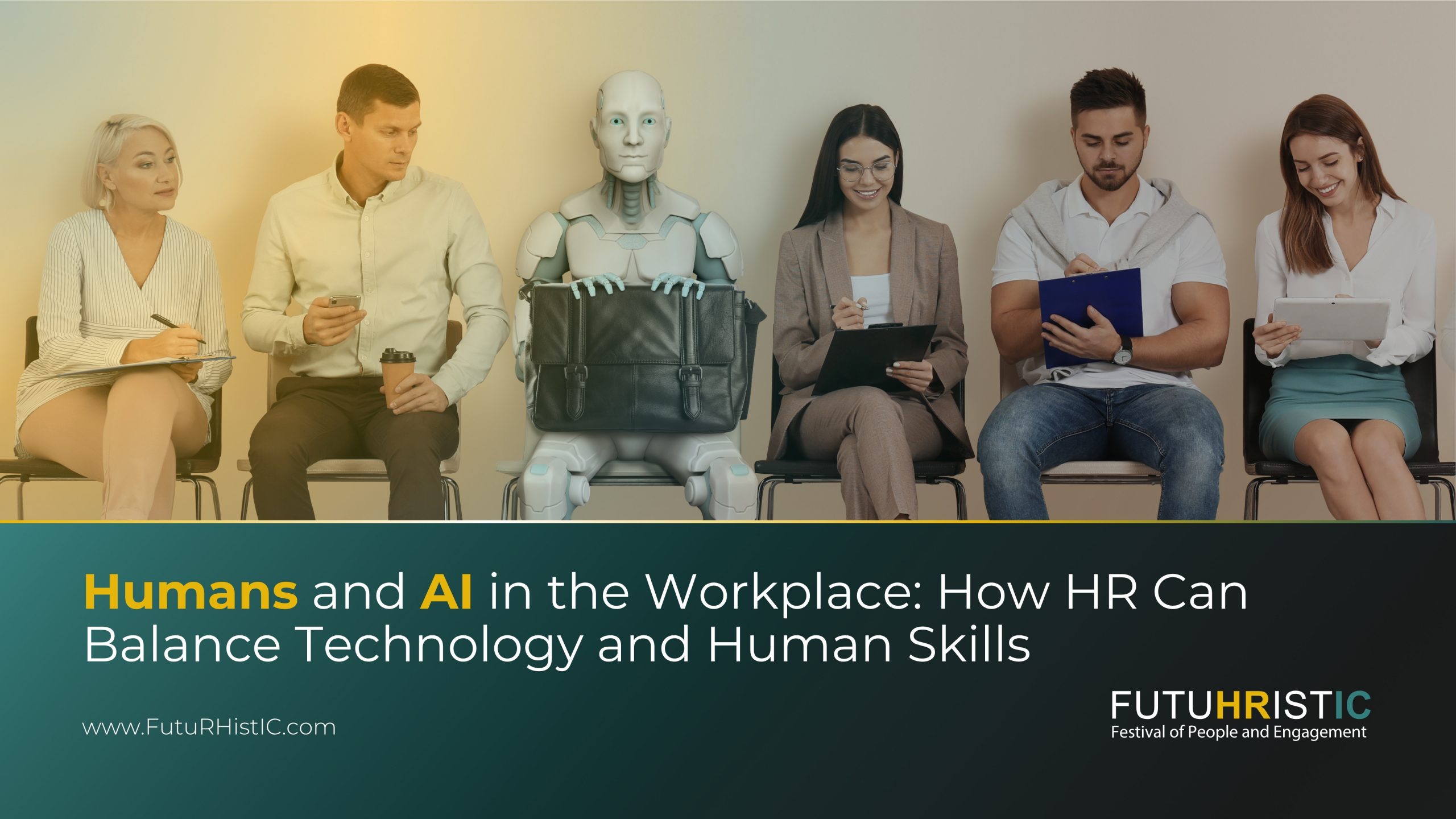
The most effective organisations are not choosing between humans and AI. They are combining both.
AI can identify trends in employee engagement or performance data.
Humans interpret what those trends mean in practice and decide how to respond.
AI can generate options or streamline processes.
Humans apply judgment, refine ideas, and ensure decisions are aligned with organisational values.
This combination improves both efficiency and quality of outcomes.
Managing risks and expectations
It is important to recognise that AI is not without limitations. It can produce inaccurate outputs, misinterpret data, or miss important context.
At the same time, human decision-making is not always consistent and can be influenced by bias or incomplete information.
A balanced approach acknowledges both. AI should be used to support, not replace, human judgment. Clear governance, oversight, and accountability remain essential.
What this means for HR leaders
For HR, the integration of AI is not only a technological shift but also a people challenge.
Leaders need to consider:
- How roles and responsibilities are evolving
- What skills do employees need to develop
- How to maintain trust and transparency when using AI
- How to ensure technology supports, rather than replaces, human connection
Organisations that manage this well are more likely to create workplaces where both efficiency and engagement improve.
Looking ahead
The conversation around AI will continue to evolve, but one point is becoming clear. The future of work is not defined by technology alone. It is shaped by how organisations choose to use it alongside human capability.
At FutuHRistIC 2026, this balance is explored through practical discussions on AI, leadership, culture, and the employee experience.
Frequently Asked Questions (FAQ)
Will AI replace human jobs completely?
AI is likely to change how work is done rather than fully replace human roles. Many tasks can be automated, but human skills such as judgment, communication, and empathy remain essential.
How is AI used in HR today?
AI is used in HR for tasks such as data analysis, recruitment screening, reporting, and improving efficiency in administrative processes.
What skills are important in an AI-driven workplace?
Skills such as critical thinking, communication, adaptability, and emotional intelligence are becoming increasingly important alongside technical knowledge.
How can organisations balance AI and human work?
Organisations can balance AI and human work by using AI for efficiency and data processing, while relying on humans for decision-making, context, and leadership.
What is the role of HR in AI adoption?
HR plays a key role in managing change, developing skills, ensuring ethical use of AI, and maintaining a strong employee experience.


