



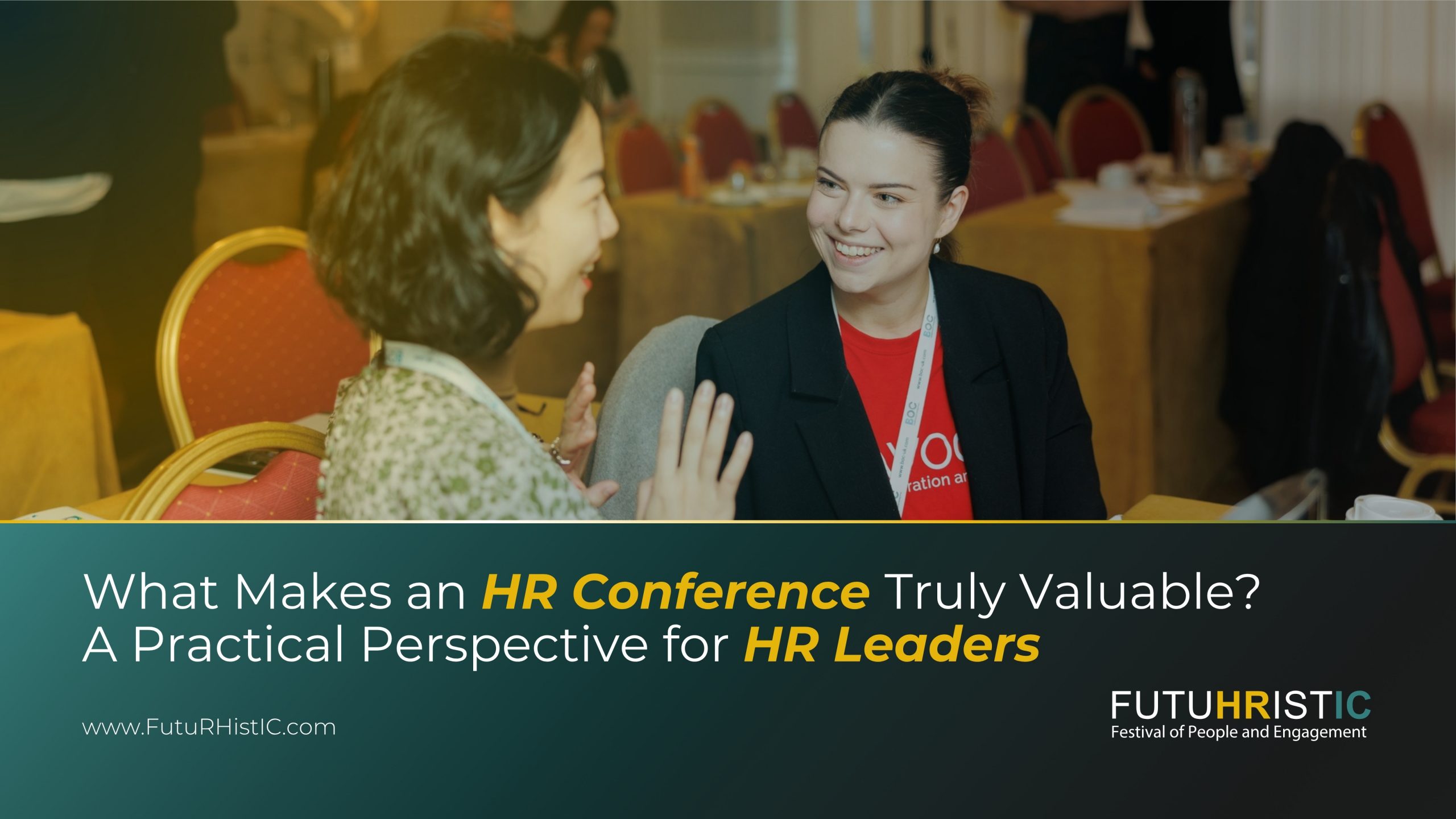
What Makes an HR Conference Truly Valuable? A Practical Perspective for HR Leaders
Why the value of HR conferences is being questioned
HR conferences have become a regular part of the professional calendar. Agendas are carefully curated, speakers are well-known, and topics reflect current priorities such as employee experience, leadership, and organisational culture.
Yet many HR leaders leave these events with the same question: was it worth the time?
As expectations around learning and development evolve, the standard for what makes a conference valuable has shifted. It is no longer enough to attend, listen, and take notes. The value now lies in what changes afterwards.
From content consumption to practical application
One of the most common gaps in HR events is the distance between theory and practice.
Many sessions introduce ideas that sound relevant, but remain difficult to apply. Concepts are discussed at a high level, without enough attention to how they translate into real organisational settings.
For HR professionals, the key question is not what is interesting, but what is useful.
A valuable conference provides insight that can be applied in practice. This often comes through case studies, honest reflections, and discussions that go beyond success stories to include challenges and lessons learned.
Understanding what did not work can be as important as understanding what did.
The importance of relevance
HR leaders operate in different contexts, industries, and organisational structures. What works in one setting may not transfer directly to another.
This is why relevance matters more than volume.
Events that attempt to cover every topic often dilute their impact. A more focused approach, centred on current and shared challenges, allows for deeper exploration and more meaningful discussion.
Attendees benefit when they can see a clear connection between the content and their own day-to-day responsibilities.
Learning through conversation, not just presentation
While keynote sessions and presentations remain important, much of the real value of a conference lies in conversation.
Discussions with peers often provide practical insight that is not captured in formal sessions. Hearing how others are addressing similar challenges, what they are prioritising, and where they are struggling can offer a more realistic perspective.
Conferences that create space for these interactions tend to deliver greater value. Smaller group discussions, roundtables, and informal exchanges allow for a more open and useful dialogue.
For HR professionals, this exchange of experience is a critical part of learning.
Bringing HR and internal communication together
Many of the challenges organisations face today do not sit within a single function.
Employee engagement, change management, leadership alignment, and culture all require close collaboration between HR and internal communications. When these areas are treated separately, efforts can become fragmented.
Conferences that bring these perspectives together offer a more complete understanding of how organisations operate.
They allow professionals to see how communication supports HR strategy, and how HR initiatives are experienced across the organisation.
The role of structure and design
The way a conference is designed has a direct impact on its effectiveness.
Overloaded agendas, limited breaks, and back-to-back sessions can reduce the ability to absorb information. Even high-quality content becomes difficult to process without time to reflect.
A well-structured event recognises this. It balances content with discussion, and learning with reflection.
This creates the conditions for ideas to be understood, considered, and eventually applied.
Measuring value beyond the event
The real measure of a conference is not how engaging it was in the moment, but what remains afterwards.
Did it influence how you approach a challenge?
Did it provide ideas that can be implemented?
Did it introduce people you can continue learning from?
If the answer is yes, the event has delivered value.
If not, it becomes another entry in a calendar rather than a meaningful investment.
The evolving expectation of HR leaders
As the role of HR continues to expand, so do expectations around professional development.
HR leaders are no longer looking for inspiration alone. They are looking for clarity, relevance, and practical direction.
This is changing the way conferences need to be designed. The focus is shifting from presentation to participation, from content to context, and from ideas to application.
Looking ahead
The future of HR events will depend on their ability to meet these expectations.
At FutuHRistIC 2026, the focus is on creating a space where HR and Internal Communications professionals can explore real challenges, share practical insights, and build connections that extend beyond the event itself.
About FutuHRistIC™ Festival
Since 2012, FutuHRistIC™ has been connecting people, culture, and communication. Now in its 12th year, this four-day London festival breaks down the silos between disciplines, bringing together the Reinventing HR Summit and the Internal Communications Conference. It is a collaborative space for forward-thinking people leaders and communication professionals to step away from day-to-day pressures, challenge ideas, and shape a more connected, human future of work.
With registrations now open, we invite professionals from across industries to join the conversations shaping the future of leadership, communication, culture, employee engagement, and organisational transformation.
Discover more about the festival, speakers, and programme updates at FutuHRistIC Festival.
Frequently Asked Questions (FAQ)
What makes an HR conference truly valuable?
A valuable HR conference offers relevant content, practical insights, opportunities for discussion, and connections with other professionals that continue beyond the event.
Why do some HR conferences feel less useful?
Conferences can feel less useful when they focus too much on theory, cover too many topics without depth, or do not provide space for meaningful discussion and application.
What should HR leaders look for when choosing a conference?
They should look for relevance to their current challenges, practical case studies, opportunities to engage with peers, and a well-balanced agenda.
How can HR professionals get more value from conferences?
They can focus on sessions that align with their priorities, engage in conversations, and reflect on how insights can be applied in their organisation.
Why is collaboration between HR and internal communications important?
Collaboration ensures that organisational strategies are clearly communicated and consistently experienced by employees, improving engagement and alignment.


