


The Future of HR and Work: An Inside Look at FutuHRistIC 2026 with Festival Director Maka Quparadze
Technology, changing business priorities and evolving employee expectations are transforming the way organisations operate. But behind every organisational shift are people: employees adapting to new demands, leaders navigating uncertainty and teams finding new ways to work together.
As artificial intelligence reshapes professional responsibilities, organisations face an increasingly important challenge: how to embrace change while keeping people, trust and communication at the centre of their decisions. With these questions becoming increasingly relevant across the workplace, FutuHRistIC 2026 offers professionals an opportunity to explore them first-hand.
Organised by BOC Global Events & Training Group, FutuHRistIC 2026 takes place 17–20 November at The Bentley Hotel, Kensington, London. As the festival approaches, professionals from across the industry are preparing to come together to exchange perspectives, explore emerging challenges and discover practical approaches to the future of work.
Bringing People, Leadership and Communication Together: An Interview with Maka Quparadze, Festival Director of FutuHRistIC™
Ahead of the festival, we spoke with Maka Quparadze, Festival Director of FutuHRistIC™, about the vision behind the event, the changing responsibilities of HR leadership and the ideas she hopes delegates will take back to their organisations.
– What was the original vision behind FutuHRistIC? What inspired you to create the festival, and what gap in the HR industry did you hope to address?
Through our work in events, training and awards, I’ve seen how closely people’s experience at work is connected to leadership and communication. Yet these subjects are often discussed separately, with HR in one room and internal communications in another.
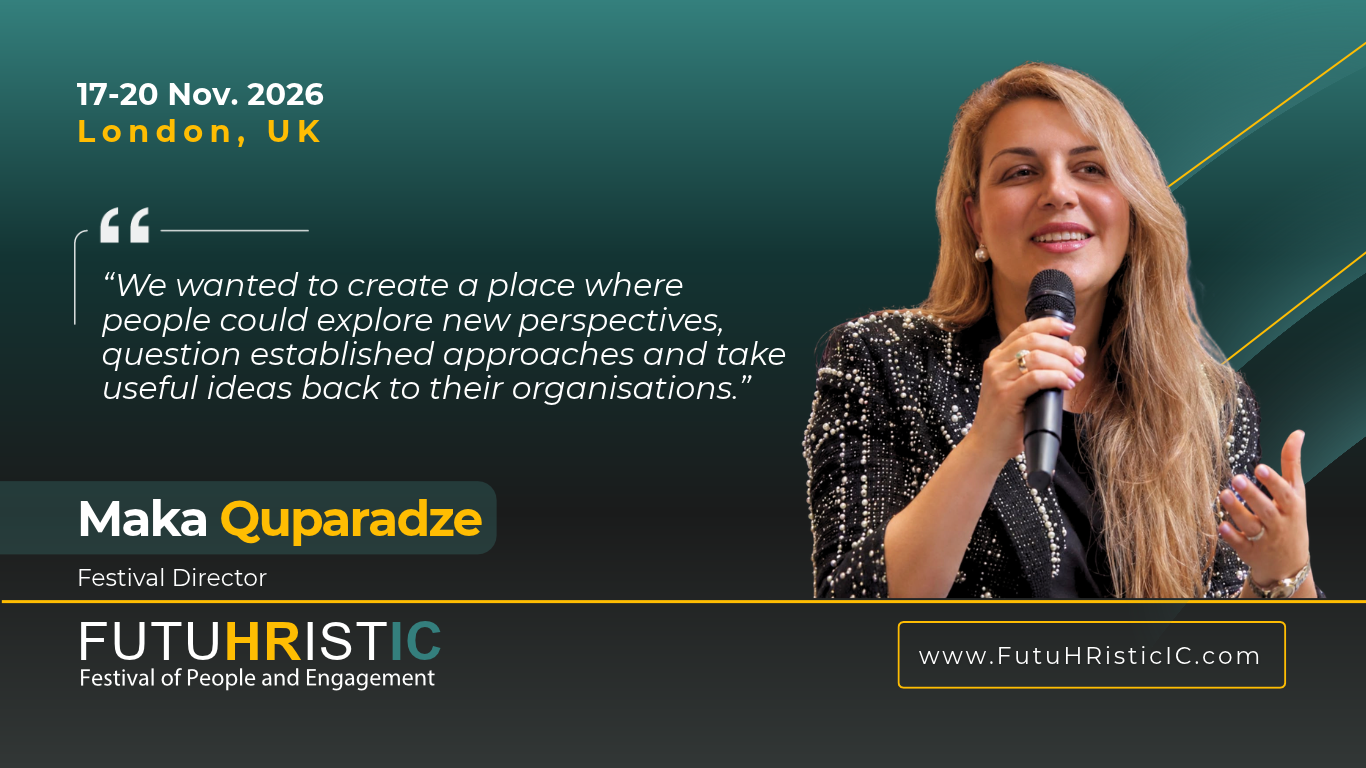
We wanted FutuHRistIC to bring those conversations together. If an organisation wants to build trust, introduce change or improve engagement, it needs these functions working together. The vision was to create a place where people could explore those connections, question established approaches and take useful ideas back to their organisations.
– What does the future of HR mean to you? How do you think the profession will evolve over the coming years?
For me, the future of HR comes down to the decisions organisations make about people as work changes. Technology will influence those decisions, but so will expectations around fairness, flexibility, development and leadership.
I see HR becoming more involved in shaping how organisations operate: how work is designed, which skills are developed and how managers are supported. That requires commercial understanding and the confidence to challenge decisions, alongside a close understanding of employees’ experiences. The profession has an opportunity to help organisations make better decisions before problems emerge.
– What makes FutuHRistIC different from traditional HR conferences? What does the festival format offer that more conventional industry events might not?
We’ve designed four days around connected subjects, with different ways to participate. The programme moves from the Reinventing HR Summit to practical workshops, then the HR & IC Leadership Forum and the Internal Communications Conference.
That gives delegates space to hear an idea, work through its practical implications and discuss it with people who approach the same challenge from a different perspective. Someone working in HR can learn from an internal communications leader, and vice versa. Those exchanges are a central part of what I wanted the festival to offer.
– How is the role of HR leadership changing?
HR leaders are increasingly expected to make difficult judgements where there isn’t a straightforward answer. How do you introduce AI responsibly? How do you balance business pressures with employee wellbeing? How do you maintain trust through change?
They need to understand the business, ask difficult questions and explain the reasoning behind decisions. They also need to equip managers to handle those decisions well. An organisation can have excellent policies, but employees experience them through everyday interactions with their managers. HR leadership has a significant influence on whether those interactions build confidence or undermine it.
– What are the defining themes of the FutuHRistIC 2026 programme?
The programme brings together the changing role of HR, leadership in the era of AI, employee engagement, workplace culture and internal communications.
A recurring question is how organisations turn ambition into something employees can understand and experience. What does a change in strategy mean for someone’s role? How do leaders communicate uncertainty? How do teams sustain engagement when expectations keep shifting?
Across the summit, workshops, leadership forum and communications conference, we’re looking at these questions from several perspectives, with time to explore what they mean in practice.
– What emerging HR trends should professionals pay closer attention to? Are there any developments that you believe are currently underestimated but will significantly influence the future of work?
I would pay close attention to what AI adoption asks of managers. There is a lot of discussion about the tools themselves, but managers will be dealing with employees’ questions about changing responsibilities, skills and job security. They need preparation and support to have those conversations honestly.
I also think organisations should examine whether employee listening leads to visible action. Collecting feedback is relatively easy; deciding what to change, explaining what cannot change and following through takes more work. People notice whether their input influences anything. That will matter increasingly as organisations ask employees to adapt.
– How do you measure the festival’s success beyond attendance? What kind of impact or lasting change would you like FutuHRistIC to create for its delegates and their organisations?
Attendance tells us how many people we’ve brought together. I’m more interested in what they do afterwards.
Did a conversation help someone approach a difficult situation differently? Did a workshop give them something they could use with their team? Did they meet a peer they can turn to for advice?
I’d like delegates to leave with a clearer sense of what deserves their attention and one or two practical steps they feel confident taking. Hearing later that an idea led to a better conversation, a stronger working relationship or a useful change is a meaningful measure of success for me.
– As we approach FutuHRistIC 2026, what is the one message you would like to share with HR professionals, industry leaders and everyone joining this year’s festival?
Come with a real question you’re trying to answer in your organisation. Bring your experience, including the things that haven’t worked, and be ready to hear a different perspective.
There is considerable knowledge in this community, and the value grows when people speak openly and share it. My hope is that everyone joining us in London from 17–20 November leaves with something they can act on and people they can continue learning with.
Join FutuHRistIC 2026 in London
With four programme days covering different aspects of HR, leadership and internal communications, FutuHRistIC offers several ways to engage with the challenges and opportunities shaping today’s workplace.
The programme includes:
- 17 November: Reinventing HR Summit
- 18 November: Workshops
- 19 November: HR & IC Leadership Forum
- 20 November: Internal Communications Conference
The festival is fast approaching, and now is the time to secure your place. Join industry professionals in London for four days of learning, practical workshops and professional exchange, and take away ideas you can put into practice in your organisation.
To explore the sessions and attendance options, request the festival agenda or visit futuhristic.com to register.


