


Building a Culture Where Every Voice Matters: An Interview with Anthea Armar on Creating Workplaces Where People Feel Heard
As FutuHRistIC 2026 approaches, professionals from across HR, internal communications, leadership and employee experience are preparing to come together in London from 17–20 November at The Bentley Hotel, Kensington, to explore the challenges and opportunities shaping the future of work.
Organisations invest considerable time and resources in improving workplace communication. From employee surveys and internal platforms to leadership meetings and engagement initiatives, there are more ways than ever for employees to share their perspectives. Yet having communication channels in place does not necessarily mean people feel comfortable using them.
Behind many workplace challenges lies an issue that is harder to measure: organisational silence. Employees may recognise risks, have valuable ideas or disagree with important decisions, but choose not to speak up. Over time, this can affect decision-making, workplace culture, employee engagement and organisational performance. As businesses navigate digital transformation, changing employee expectations and increasingly complex workplace dynamics, understanding why people remain silent is becoming an important responsibility for leaders.
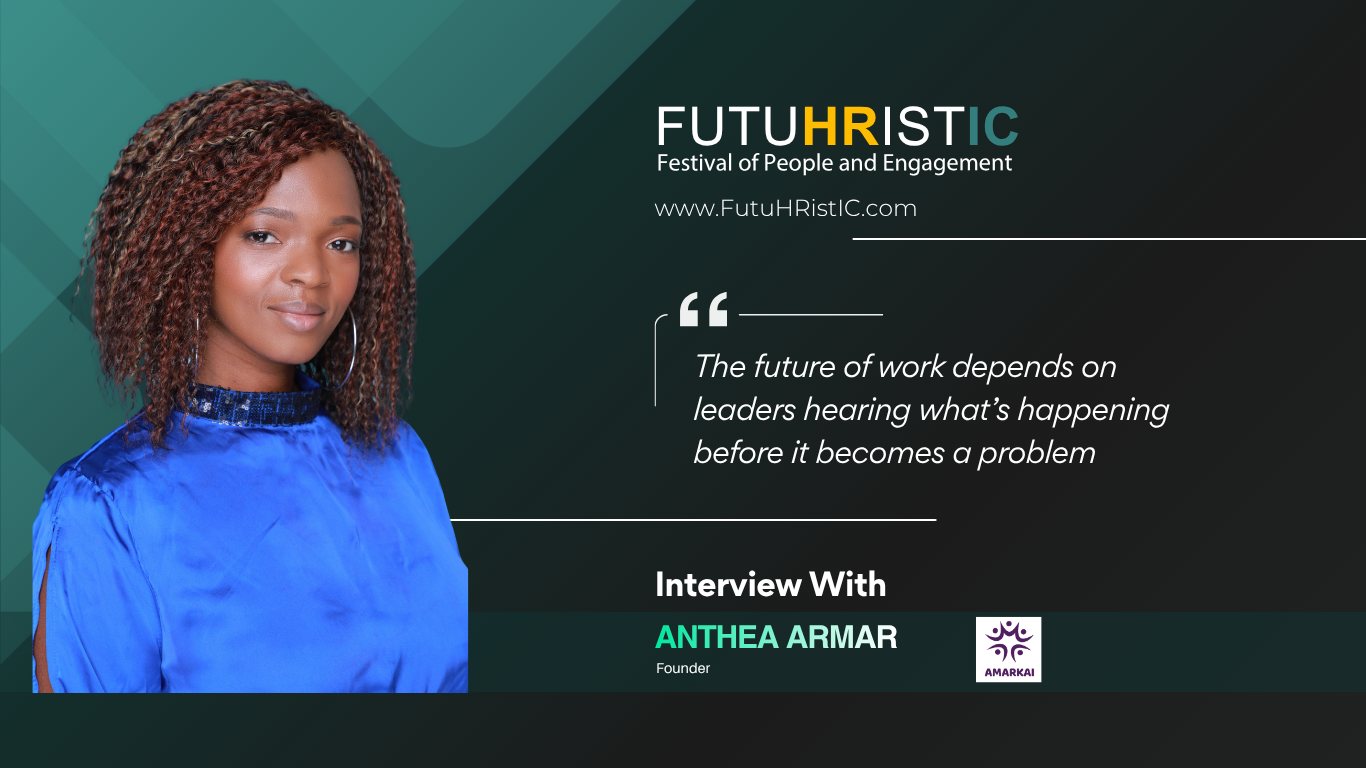
Ahead of the festival, we spoke with Anthea Armar, Founder of Amarkai Group, about the hidden cost of organisational silence, the relationship between leadership and psychological safety, and why creating opportunities for employees to speak up requires more than simply introducing additional communication channels.
Creating Workplaces Where People Feel Heard: An Interview with Anthea Armar
– What initially sparked your interest in organisational communication, and how has your experience shaped the way you approach the relationship between employees and leadership?
I spent over 20 years in learning and development, leading, designing and facilitating training inside large organisations in the public and private sectors. I remember being in countless rooms listening to senior leaders share their plans and no one challenging them, until the meeting ended and we went back to our desks. What I kept seeing was people who had expertise, opinions and experience, yet stayed silent and deferred to the most senior person in the room, even when they could see the leader wasn’t right.
Since 2021, that silence has been my focus. It’s influenced how I see the relationship between employees and leaders: most people already know what they want to say. What they’re considering is whether it’s safe for them to say it.
– Your session at FutuHRistIC Festival explores the idea that organisations don’t necessarily have a communication problem, but a silence problem. What made you focus on this particular issue, and why do you think it deserves more attention today?
The cost of silence doesn’t show up on any report. A risk raised in May was first noticed by someone in January. A good idea gets shared in the corridor or over lunch instead of inside the meeting. A quieter person gets passed over for promotion because nobody heard the value they bring.
45% of UK employees don’t feel comfortable raising issues, mistakes or risks at work (MHFA England, 2026). Organisations measure what people say in surveys, but many don’t look at what people don’t say in the room.
– We have more workplace communication channels than ever before, yet meaningful dialogue is not always guaranteed. Why do you think organisations sometimes communicate more but listen less?
When people don’t speak up, the typical response is to add another channel to reach them: a survey, a forum, an inbox, a town hall Q&A. Having a way to speak up isn’t the same as feeling safe enough to use it.
People have learned the consequences of challenging a decision, sharing an idea or offering an incomplete thought. Staying quiet is how they protect themselves. Another new channel won’t convince them otherwise. So the volume of communication goes up while the number of people taking part stays the same.
– What does an organisation risk losing when employees stop sharing their ideas, concerns and feedback? How can this silence affect workplace culture, employee engagement and business performance?
It loses qualitative data that it can’t get anywhere else. Problems get found out late, when they become critical or expensive to fix. Decisions get made without thoughtful challenge. The people with the most useful viewpoints stay less visible, so aren’t considered when opportunities come up.
Some of them leave and don’t always share the real reason. Culture slowly shapes itself around the loudest voices, not the missing ones.
– You identify three things leaders can change to make speaking up safer. Could you share one practical change that leaders can start implementing immediately?
In your next meeting, ask for input from employees before the most senior person gives theirs. Once a senior leader has shared an opinion, most people use that as the benchmark or final decision. So, they adjust what they were going to say or say nothing at all.
Hearing perspectives from the room costs nothing and it changes who speaks and how people share. It works even better when the chair takes responsibility for making sure every voice in the room has been heard, not only those who are most confident to share.
– FutuHRistIC Festival brings together professionals from HR, internal communications, leadership and employee experience. Why is it important for these different areas to work together when addressing challenges such as organisational silence?
Each group sees a different part of the problem. Internal communications sees who engages with the channels. HR sees it in the grievances, exit interviews and promotion rounds. Leaders see it in meetings where nobody challenges them.
On their own, each piece looks somewhat insignificant. Together, it shows a clearer picture of where silence is costing the organisation and who is staying quiet.
– This year’s programme explores several major themes, including leadership, workplace culture, employee engagement, digital transformation and the future of work. Where do you see the strongest connection between these topics and the importance of genuinely listening to employees?
Leadership. Every one of those themes depends on leaders hearing what’s happening before it becomes a problem.
Digital transformation is a good example: the people using a new system day to day usually notice the issues first. Whether they say so depends on how the last person who raised a concern was treated. Silence then gets read as agreement and the organisation believes it made a sound investment.
Listening isn’t a separate activity. It’s how leaders find out whether everything else is working.
– What conversations do you hope your session will encourage at FutuHRistIC Festival 2026, and what would you like attendees to take back to their organisations? Why should professionals working in HR, internal communications and leadership make this session part of their festival experience?
I’d like people to leave asking a different question. Not “how do we get more people to respond?” but “who isn’t speaking, why and what is it costing us?”
Attendees will leave with three practical changes leaders can make this month and a way to find out where silence is costing their own organisation.
If you’ve ever left a meeting and heard the real, honest conversation start in the corridor afterwards, this session is for you.
Join FutuHRistIC 2026
Organisational silence is not simply a communication challenge. It is a leadership issue that influences how decisions are made, how employees experience their workplace and whether organisations can recognise problems before they escalate.
Anthea Armar’s session will invite delegates to look beyond traditional engagement measures and consider what remains unsaid within their organisations. For HR professionals, internal communications specialists and business leaders, it offers an opportunity to rethink how they create environments where employees feel confident sharing their perspectives.
FutuHRistIC brings together four days of industry insights, practical workshops and professional exchange, with a programme covering different aspects of HR, leadership and internal communications.
The programme includes:
- 17 November: Reinventing HR Summit
- 18 November: Workshops
- 19 November: HR & IC Leadership Forum
- 20 November: Internal Communications Conference
The festival is fast approaching, and now is the time to secure your place. Explore new perspectives, exchange experiences with industry professionals and take away practical ideas you can put into action within your organisation.
To explore the sessions and attendance options, request the festival agenda or visit futuhristic.com to explore your ticket options and register.


