


Speaker Insights: Emma Wilson-Wyer, Senior People & Impact Manager, KAEFER
As organisations continue navigating rapid workplace transformation, evolving employee expectations, and increasingly multigenerational workforces, leadership is being redefined in real time. Businesses today are not only rethinking how people work, but also how leaders communicate, build trust, and create cultures where employees feel genuinely seen, supported, and empowered.
At FutuHRistIC Festival 2026, The Festival of People & Engagement, HR, talent acquisition, leadership, and transformation professionals will come together in London for four days of conversations shaping the future of work. Through keynote sessions, interactive workshops, and collaborative networking, the festival explores the strategies, technologies, and human experiences driving workplace transformation today.
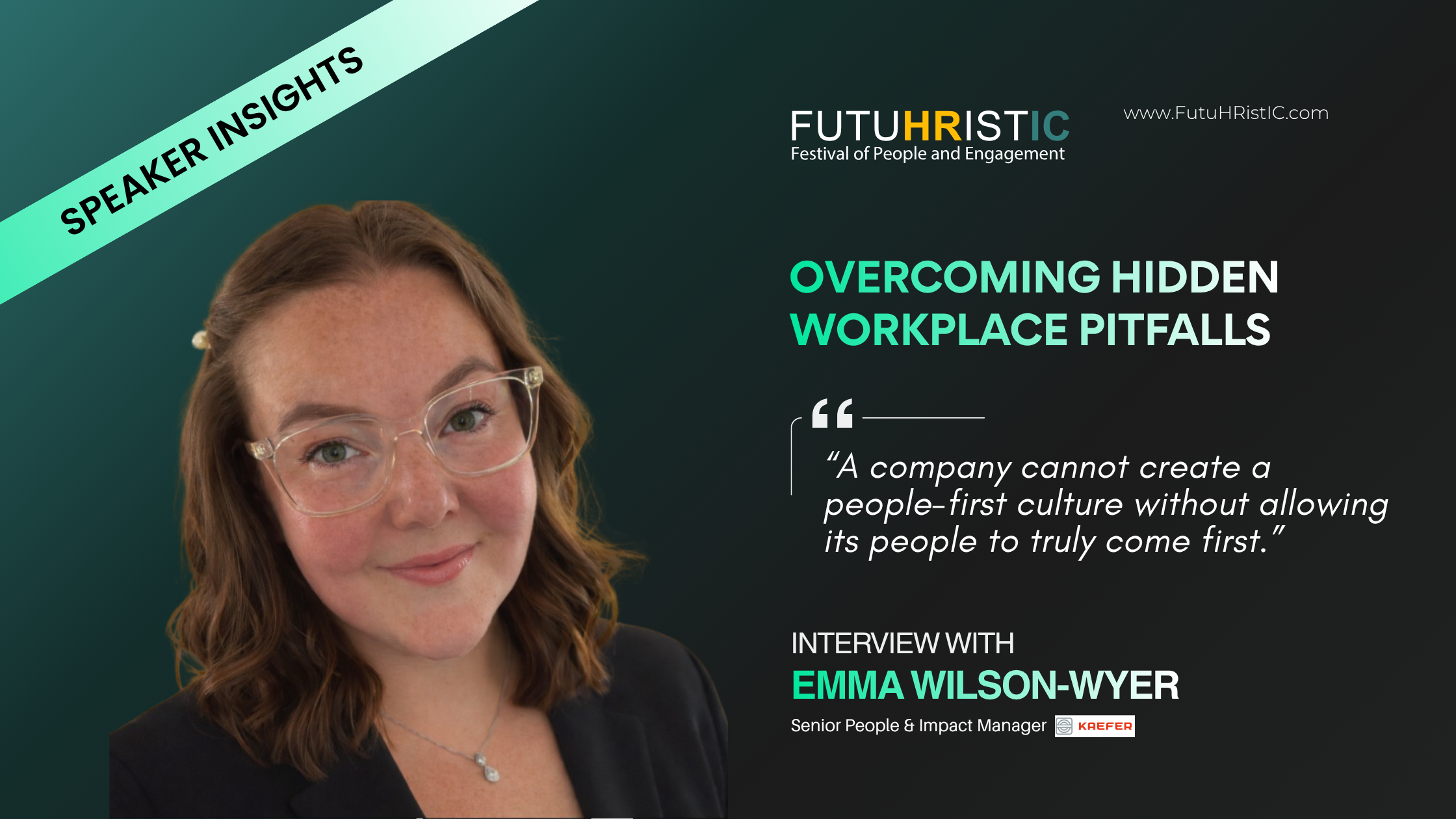
In this edition of our Speaker Insights interview series, we speak with Emma Wilson-Wyer, Senior People & Impact Manager at KAEFER. Emma is a seasoned HR professional with more than 12 years of experience spanning a diverse range of sectors, from healthcare environments to specialist HR functions within the automotive industry. Throughout her career, Emma has developed a profound focus on the psychological factors that shape human behaviour at work, becoming a passionate advocate for leadership approaches that prioritise humanity.
We’re delighted to have you join us at the FutuHRistIC Festival 2026 this year. Your work strongly focuses on human-centred leadership and workplace culture. What key themes and conversations will you be exploring during your session?
I would like to explore the impact of human-centred leadership on workplace culture, particularly focusing on how leaders’ communication style and delivery can have an almost immediate impact across the workforce and therefore should be consistent, considered, and relevant.
Your HR career spans more than 12 years across healthcare, automotive, and specialist people functions. How have those very different environments shaped your understanding of leadership, culture, and employee experience?
“Having the opportunity to work across such a variety of sectors has enabled me to experience a range of challenges and solutions when it comes to workplace culture and communication. Exposure to contrasting cultures, both good and bad, has allowed me to form my own ‘toolkit’ of leadership skills to utilise not only in my own role but also to coach and mentor stakeholders at a senior level.
What first sparked your curiosity about the psychological factors that influence behaviour at work, and why do you think understanding human behaviour is becoming increasingly important for organisations today?
My curiosity about human behaviour was sparked at a very young age and was driven by experiencing a multitude of negative human behaviours. As a child, I found myself wanting to understand why people behaved in certain ways.
That curiosity transitioned organically into the workplace through my Human Resources career and grew into more specific areas such as leadership behaviours and the impact they have on psychological welfare and workplace culture.
I believe that understanding human behaviour is becoming increasingly important for organisations today due to generational factors. For the first time, we are experiencing workforces made up of five generations, Traditionalists, Baby Boomers, Gen X, Millennials, and Gen Z, requiring organisations to consider five different needs, preferences, and motivators, alongside, quite often, a technological skills gap.
Many companies speak about creating people-first cultures, yet employees still often feel disconnected or unable to fully be themselves. Where are organisations still getting it wrong when it comes to creating genuinely human-centred workplaces?
In my opinion, a company cannot create a people-first culture without allowing its people to truly come first. Values are not born in the boardroom, belonging cannot be created through a poster on the wall, and a single recognition scheme cannot make every individual feel truly valued.
Collaboration is imperative to building a people-first culture, with engagement at all levels at all times. This can feel almost impossible to facilitate through specific initiatives, particularly in large organisations, which is where human-centred leadership makes a difference.
By leading organisations as humans instead of job titles and hierarchical roles, human leadership can encourage open communication by offering psychological safety alongside an empowered workforce, irrespective of job roles. This results in constant collaboration through engagement channels without the need for targeted initiatives.
You’ve observed both the strengths and shortcomings of workplace cultures across multiple industries. What are some of the common patterns you’ve noticed that either help people thrive or quietly push them away?
The standout behaviour that I have noticed negatively impacting workplace culture is ego-led leadership. In my opinion, this is the quickest way to lose your workforce. If the need to be in control, correct, or credited comes before collective success, then workplace culture will suffer immeasurably and often silently.
As for the patterns I have noticed that help people thrive in the workplace, unsurprisingly, it is when leaders and managers present themselves and treat others as human beings, showing vulnerability, openness, and relatability outside of their job roles while building genuine relationships.
Leadership appears to sit at the heart of your work and philosophy. What do you think defines truly human-centred leadership in practice, particularly in fast-moving and high-pressure organisations?
Vulnerability. Leaders who are truly human-centred should allow themselves to be completely authentic and show their whole selves before expecting others in the organisation to do the same. This has a particular impact when leaders are open about their own limitations or preferences instead of viewing those as weaknesses.
By doing so, leaders can quickly build teams of supporters who feel comfortable sharing their own limitations or preferences, even within fast-paced and high-pressure environments.
Attraction and retention remain major challenges for organisations globally. Do you believe people today are looking for something fundamentally different from employers and leaders compared to previous generations?
In short, yes. The multigenerational workforce we are seeing in organisations today brings a variety of preferences. However, since the COVID-19 pandemic and the shift in working practices that followed, there is now a much stronger requirement for work-life balance, flexibility, and digitally led working where appropriate.
Many of the things employees are now looking for involve less organic human interaction, which is why human leadership is becoming increasingly vital in creating positive, people-focused cultures moving forward.
One of the strengths of FutuHRistIC Festival 2026 is bringing together leaders from HR, culture, communications, transformation, and leadership across different industries. What value do you think comes from having those cross-industry conversations around people and workplace culture?
Cross-industry knowledge sharing is beneficial to anyone who is passionate about making a difference. Comparing challenges, solutions, and ideas broadens the creative mindset that we need as People Professionals to bring fresh initiatives into the workplace and continue developing workplace culture.
About FutuHRistIC™ Festival
Since 2012, FutuHRistIC™ has been connecting people, culture, and communication. Now in its 12th year, this four-day London festival breaks down the silos between disciplines, bringing together the Reinventing HR Summit and the Internal Communications Conference. It is a collaborative space for forward-thinking people leaders and communication professionals to step away from day-to-day pressures, challenge ideas, and shape a more connected, human future of work.
With registrations now open, we invite professionals from across industries to join the conversations shaping the future of leadership, communication, culture, employee engagement, and organisational transformation.
Discover more about the festival, speakers, and programme updates at FutuHRistIC Festival.


