


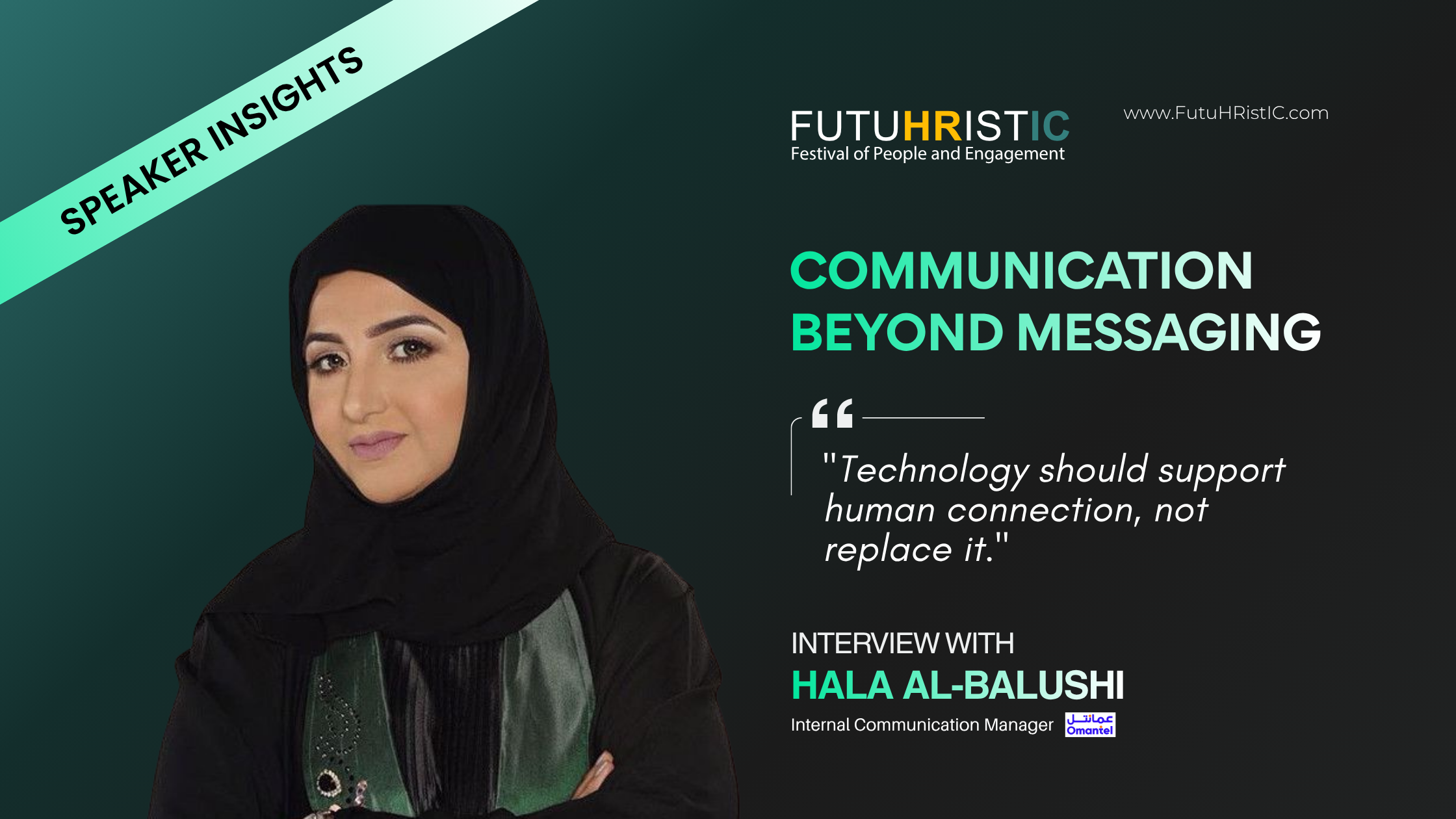
Speaker Insights: Hala Al-Balushi, Internal Communication Manager, Omantel
As organisations continue navigating transformation, digital disruption, and evolving employee expectations, communication has become one of the most influential drivers of culture, trust, and engagement. Increasingly, organisations are recognising that communication is not simply about sharing information; it is about creating connection, building understanding, and helping people navigate change with confidence and purpose.
At FutuHRistIC Festival 2026, The Festival of People & Engagement, HR, talent acquisition, leadership, communications, and transformation professionals will come together in London for four days of conversations shaping the future of work. Through keynote sessions, interactive workshops, and collaborative networking, the festival explores the leadership approaches, communication strategies, technologies, and employee experiences driving workplace transformation today.
In this edition of our Speaker Insights interview series, we speak with Hala Al-Balushi, Internal Communication Manager at Omantel. With more than 20 years of experience spanning corporate operations, HR, leadership support, and strategic communications, Hala brings a unique blend of business insight and people-centred communication. Having led engagement initiatives, communication frameworks, and transformation programmes, she is passionate about creating collaborative environments that connect people to purpose and deliver meaningful business outcomes.
We’re delighted to have you join us at the FutuHRistIC Festival 2026 this year. What key themes and conversations will you be exploring during your session?
My session will focus on how internal communication has evolved from being a support function into a strategic driver of culture, trust, and transformation. I’ll be sharing perspectives from Oman and the GCC region, where communication is deeply connected to relationships, leadership presence, and cultural understanding.
I’ll also explore how organisations can create more human-centred employee experiences during periods of rapid change, and why authentic communication matters more than polished messaging. Most importantly, I want to bring practical examples and honest reflections around what truly helps people feel connected, valued, and aligned with purpose.
How have your experiences shaped the way you approach internal communication today?
Working across operations, HR, leadership support, and communications gave me a broader understanding of how organisations actually function beyond communication plans and campaigns. It helped me see employees not as audiences, but as people navigating pressure, change, expectations, and growth every day.
Today, I approach internal communication as a business and human function at the same time. Effective communication should support strategy, but it should also create trust, clarity, and emotional connection. The strongest communication happens when leaders genuinely understand people, not just processes.
What are organisations still underestimating about the impact communication can have on business performance and workplace culture?
Many organisations still underestimate how strongly communication shapes employee trust, motivation, and performance. Communication is often treated as the final step after decisions are made, when in reality it should be part of the decision-making process itself.
Poor communication creates confusion, resistance, and disengagement, while transparent and consistent communication can accelerate alignment, collaboration, and execution. Culture is not built through posters or slogans; it is built through everyday conversations, leadership behaviour, and the way people experience communication inside the organisation.
Why have purpose and engagement become such important conversations within modern organisations?
People today are looking for more than stability or salary. They want to feel connected to meaningful work, valued by leadership, and part of something bigger than tasks and targets.
During times of transformation and uncertainty, purpose becomes an anchor. When employees understand why change is happening and how they contribute to it, engagement becomes much stronger. Organisations that create emotional connection alongside business direction are often the ones that sustain performance and loyalty over time.
What are some of the biggest challenges organisations face when trying to communicate change effectively?
One of the biggest challenges is communicating change too late or too formally. Employees usually sense change long before official announcements happen, and silence often creates uncertainty and assumptions.
Another challenge is focusing only on business outcomes while overlooking the human impact. People don’t resist change because they dislike transformation; they resist feeling excluded, unheard, or disconnected from the process.
Successful change communication requires transparency, leadership visibility, consistency, and continuous dialogue rather than one-way communication.
How important is it for communication leaders today to balance business strategy with human connection?
It’s absolutely critical. Communication leaders today must understand business priorities, transformation goals, and organisational strategy, but they must also understand people’s emotions, concerns, and experiences.
The most effective communication happens when strategy is translated into language that feels relevant, honest, and human. Employees connect with clarity, authenticity, and empathy far more than with corporate terminology.
The future of communication leadership is not only about delivering messages — it’s about building trust and helping organisations move forward together.
What role does internal communication play in building more connected and collaborative workplace cultures?
Internal communication creates the shared understanding that connects people across teams, functions, and leadership levels. It helps employees feel informed, included, and aligned around common goals.
Strong communication also breaks silos by encouraging dialogue, visibility, and collaboration instead of isolated working cultures. When communication is transparent and leadership is accessible, trust becomes stronger and collaboration becomes more natural.
At its best, internal communication creates a sense of belonging, and belonging is one of the strongest drivers of engagement and performance.
How can communication leaders ensure communication remains authentic, human, and engaging in increasingly digital workplaces?
Technology can make communication faster, but not necessarily more meaningful. The challenge is ensuring digital communication still feels personal, honest, and relatable.
Communication leaders should focus less on volume and more on relevance and connection. Employees don’t need constant messaging; they need communication that feels genuine and useful.
Storytelling, leadership visibility, employee voices, and real conversations remain essential even in highly digital environments. Technology should support human connection, not replace it.
What value comes from having cross-functional and cross-industry perspectives in one place?
Some of the most valuable conversations happen when people step outside their own function or industry and hear different perspectives. HR, communications, culture, and transformation are no longer separate conversations; they are deeply connected.
Bringing leaders together creates opportunities to exchange practical experiences, challenge assumptions, and discover new ways of approaching common challenges. It also reminds us that while industries may differ, many organisations are navigating similar questions around people, trust, engagement, and transformation.
What would you most like attendees to walk away thinking differently about?
I would like people to rethink communication as more than messaging or campaigns. Communication is an experience employees live every day through leadership behaviour, transparency, trust, and culture.
I hope attendees leave thinking more intentionally about the human side of transformation and recognising that people support change when they feel connected to it.
Most importantly, I want them to remember that organisations grow stronger when communication makes people feel seen, heard, and valued, not just informed.
About FutuHRistIC™ Festival
Since 2012, FutuHRistIC™ has been connecting people, culture, and communication. Now in its 12th year, this four-day London festival breaks down the silos between disciplines, bringing together the Reinventing HR Summit and the Internal Communications Conference. It is a collaborative space for forward-thinking people leaders and communication professionals to step away from day-to-day pressures, challenge ideas, and shape a more connected, human future of work.
With registrations now open, we invite professionals from across industries to join the conversations shaping the future of leadership, communication, culture, employee engagement, and organisational transformation.
Discover more about the festival, speakers, and programme updates at FutuHRistIC Festival.


